
Benefits of walking in nature if you have arthritis: Louise’s story
28 February 2024
Being active is one of the best things you can do to help manage your arthritis symptoms.
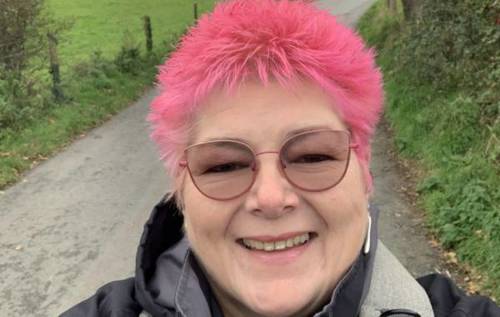
But if you don’t know how to start, Louise, 56, who lives with fibromyalgia and osteoarthritis, suggests grabbing some fresh air and going for a walk.
Here she shares how this simple activity helps her manage her pain levels and how spending time in nature boosts her mental wellbeing.
Living with fibromyalgia and osteoarthritis: Symptoms and diagnosis
Osteoarthritis happens when the body can no longer maintain and repair one or more joints.
Eventually, the cartilage (the smooth cushioning substance covering the ends of bones) becomes thin and uneven, preventing the joint from moving easily.
Fibromyalgia is a long-term condition that causes many symptoms, including pain all over your body, constant exhaustion that doesn’t improve with rest (fatigue), and many other symptoms too.
Unlike arthritis where the problem is in the joints themselves, fibromyalgia is thought to happen when your central nervous system (your brain and spine) is not able to control or process sensory signals from other parts of your body in a healthy way.
“When fatigue hits, for me it’s most noticeable when I try to walk. I describe it as trying to wade through treacle. It feels like you want to power on, but your legs just won’t go.
“When you start off with a walk, you might feel that way. But if you just keep going and manage it for five to 10 minutes, I often find that it eases.”
Managing pain: Louise’s walking journey
As her pain worsened, Louise says: “I felt like the only way I could deal with this was through pain medicines. This is where opioid medicines started to come into the picture, and that was the sort of beginning of the downfall for me.
"Then I was referred to a Pain Service in Torbay where I started to learn about pain and the limitation of the drugs."
Eventually, she got the help and support she needed, and her healthcare team helped her discontinue the opioid medicines slowly.
“To deal with the side effects of the withdrawal, the consultant suggested walking up and down the ward because exercise helps your body release endorphins, which are feel-good hormones.”
“When I came out of hospital, we’d drive to a flat place like the seafront, and I would walk along with a walker. Then eventually I started walking in local parks.
“Within the first year, my fitness improved from walking every day, I was able to ditch the walker and poles, I lost 8.5 stone in weight, and became a Ramblers Wellbeing Walk Leader, so I could set up a group for people with pain and health conditions."
Benefits of walking
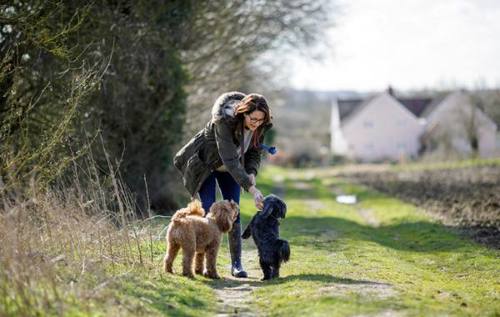 Walking is often recommended if you have arthritis. This is because it’s a low-impact activity that doesn’t need much money or special equipment, and most people with arthritis can do it.
It’s also helpful because:
- It helps strengthen the muscles around your joints.
- It can help you maintain a healthy weight.
- It reduces the risk of osteoporosis.
- You can choose the distance and pace that suits you.
- It’s a free activity that can be done pretty much anywhere.
- It can boost your mental well-being.
- Spending time outside in the spring and summer is a great way to get some vitamin D. This is a vitamin that helps the body absorb calcium and phosphate to keep the bones strong. Just make sure you wear sunscreen and stay safe in the sun.
“What I didn't know was that the less I moved, the more I would hurt,” says Louise. “But actually, if I get up out the chair now, it might hurt a little bit initially, but if I keep it going it eases. So, it’s worth preserving.
“Remember, you don't need to go and walk five miles. You don't even need to go and walk a mile. If it's completely new to you, just walk to the end of your drive and then tomorrow try and go a little bit further. Build on it slowly.”
What is mindfulness?
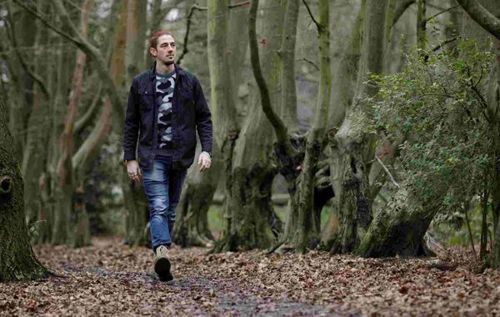 Some studies suggest that spending time in nature is helpful both for our physical and mental wellbeing – and Louise agrees.
She says that walking in her local park is a great way to practise mindfulness.
“Mindfulness is about being present in the moment,” she explains. “So, while I'm walking, I’ll try and notice all the sights, sounds, and smells, around me. It’s a sensory experience.
“It means I'm not focusing on any pain I might have. I'm not focusing on worries I might have. I'm just in the moment experiencing nature. For me, it's the most powerful form of mindfulness and it never fails to make me feel good.
We've all got worries and sometimes it can feel like you’ve got the weight of the world on you. But if you get out into nature, it changes your whole mindset.”
How can I walk mindfully?
On your next walk, you could try:
- Listening to the sound of the birds or the crunching leaves as you walk.
- Looking out for flowers, mushrooms, wildlife, or different types of trees.
- Noticing how the landscape changes every season.
- Bringing your thoughts back to the present moment if your mind wanders.
“I find walking in cities and towns to be just as enjoyable,” adds Louise, "Just look up and see what’s around you. You can find some of the most amazing architecture. And if you find the sound of traffic overwhelming, you could put in some headphones and listen to something calming”
Making walking a daily habit
Louise knows that if you haven’t been active for a while, it can be difficult to get started.
However, she “would say give it a go because you don't know if you’ll enjoy it until you've tried it.”
If you want to make walking a daily habit, you could try:
- Walking with friends, family or joining a walking group.
- Starting small and slowly build up.
- Schedule your walks so they become part of your routine.
- Explore beautiful landscapes and scenery.
- Set yourself small, but meaningful, goals and reward yourself when you achieve them
We’re here to help
If you want to get more movement in your life, remember you don’t have to take the first step alone.
There are plenty of walking groups across the country for you to try, such as Ramblers UK or Paths for All.
If you’ve been affected by issues in this story and need support with drug treatment, remember you’re entitled to NHS care in the same way as anyone else who has a health problem.
You should talk to your GP or approach a local drug service yourself. They can talk you through all your options. If you need help or support with your condition, you can also:
- Call our free helpline on 0800 5200 520
- Join our online community
- Stay in touch and follow us on X (Twitter), Facebook and Instagram.